
How Georgia's Heat and Heavy Rain Destroy Your Asphalt (And What You Can Do About It)
Georgia's Weather Is Tough on Asphalt
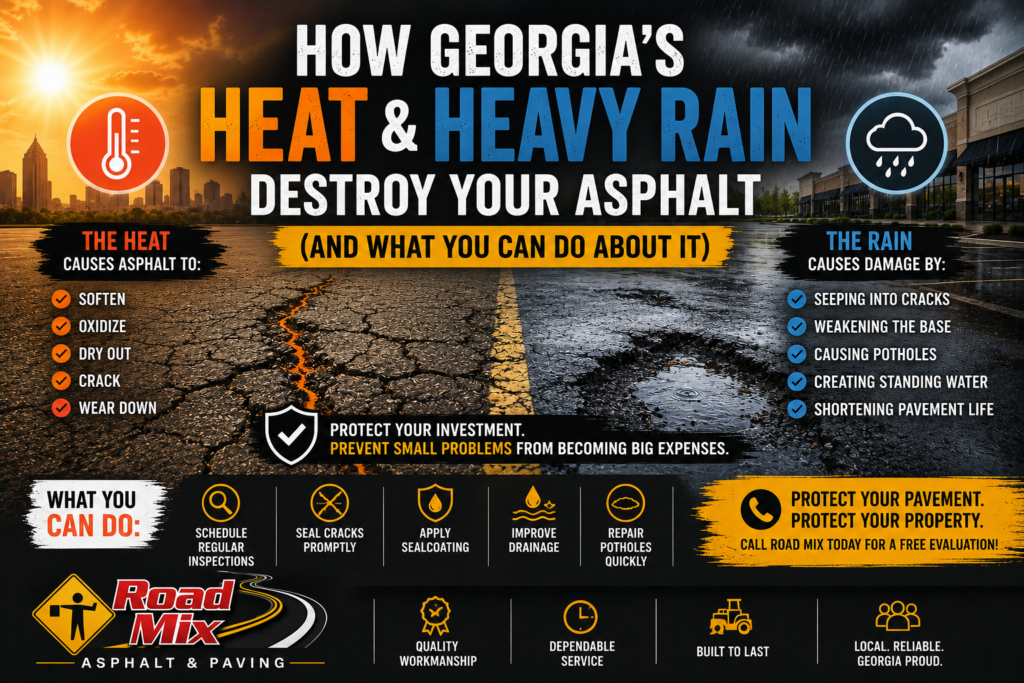
If you’ve lived in Georgia for any length of time, you know our weather can be unpredictable. One week may bring scorching temperatures and blazing sunshine, while the next brings heavy rain and thunderstorms.
Unfortunately, your asphalt parking lot feels every bit of it.
Many property owners are surprised to learn that Georgia’s climate is one of the biggest reasons asphalt surfaces develop cracks, potholes, and premature deterioration. Understanding how weather impacts your pavement can help you protect your investment and avoid costly repairs.
The Summer Heat: Asphalt’s Silent Enemy
Georgia summers regularly bring temperatures into the 90s and beyond. While asphalt is designed to withstand heat, prolonged exposure can still cause damage over time.
Extreme heat can:
- Soften asphalt surfaces
- Accelerate oxidation
- Cause the pavement to become brittle
- Increase surface wear from heavy traffic
As the protective oils in asphalt break down, the surface begins to lose flexibility and becomes more susceptible to cracking.
UV Rays Cause Oxidation
The sun doesn’t just make asphalt hot—it also slowly dries it out.
Over time, ultraviolet rays remove the natural oils that keep asphalt flexible. This process is called oxidation.
Signs of oxidation include:
- Fading from black to gray
- Surface brittleness
- Increased cracking
- Loss of smooth appearance
Once oxidation begins, deterioration often accelerates quickly.
Heavy Rain Is Asphalt’s Biggest Threat
While heat damages the surface, water often destroys the foundation.
Georgia receives significant annual rainfall, and water is one of asphalt’s greatest enemies.
Water can:
- Penetrate small cracks
- Weaken the base beneath the asphalt
- Wash away supporting materials
- Cause pavement shifting
- Create potholes
Even minor drainage issues can eventually lead to expensive repairs.
Standing Water Speeds Up Damage
If water remains on your parking lot after a rainstorm, your asphalt is likely experiencing drainage problems.
Standing water can:
- Accelerate cracking
- Create potholes
- Damage striping
- Increase slip hazards
- Shorten pavement lifespan
Proper grading and drainage are critical components of long-lasting asphalt.
The Freeze-Thaw Cycle Still Matters
Although Georgia winters are generally mild, occasional freezing temperatures can still affect pavement.
When water enters cracks and temperatures drop:
- Water freezes.
- Ice expands.
- Cracks widen.
- Additional moisture enters.
- Pavement deterioration accelerates.
This cycle can significantly increase repair costs if left unaddressed.
Trees and Landscaping Can Also Cause Damage
Many commercial properties feature beautiful landscaping and shade trees. However, tree roots can place pressure on asphalt surfaces and contribute to cracking and heaving.
Proper planning and routine inspections can help identify potential issues before they become major problems.
How to Protect Your Asphalt Investment
Fortunately, most weather-related pavement damage can be prevented or minimized.
Schedule Regular Inspections
Early detection allows small issues to be repaired before they become costly failures.
Repair Cracks Promptly
Crack sealing prevents water from entering the pavement structure.
Apply Sealcoating
Sealcoating helps protect asphalt from UV rays, moisture, and oxidation.
Address Drainage Problems
Proper drainage is essential for preserving pavement integrity.
Repair Potholes Quickly
Prompt repairs prevent further deterioration and improve safety.
Preventative Maintenance Saves Money
Many property owners wait until they see major damage before contacting an asphalt contractor.
Unfortunately, by that point, repairs are often far more expensive.
Preventive maintenance can:
- Extend pavement lifespan
- Reduce repair costs
- Improve curb appeal
- Increase safety
- Protect property value
A small investment in maintenance today can help avoid major reconstruction costs tomorrow.
Trust Road Mix Asphalt & Paving to Protect Your Pavement
At Road Mix Asphalt & Paving, we understand the unique challenges Georgia’s climate poses to commercial asphalt surfaces.
Our team provides professional:
- Asphalt repairs
- Crack sealing
- Sealcoating
- Parking lot maintenance
- Resurfacing
- Commercial paving services
We help property owners throughout Georgia protect their investments and keep their pavement looking its best year-round.
Don’t Let Georgia’s Weather Win
Your parking lot is one of the first things customers, tenants, and visitors notice. Protecting it from the effects of heat, rain, and weather-related deterioration is one of the smartest investments you can make.
If your asphalt is showing signs of wear, now is the perfect time to schedule a professional evaluation and develop a maintenance plan before small problems become expensive repairs.
Recent Posts
- 7 Warning Signs Your Commercial Parking Lot Needs Attention Before Winter
- Your Parking Lot Has a Lifespan — Here’s How to Make It Last Longer
- Asphalt vs. Concrete Parking Lots: Which Is the Better Investment for Your Property?
- How Georgia’s Heat and Heavy Rain Destroy Your Asphalt (And What You Can Do About It)
- What Your Asphalt Is Trying to Tell You: 7 Warning Signs You Should Never Ignore
Archives
Why Choose
Road Mix?

Experienced Professionals
Years of Industry Expertise
Superior Quality
Premium Materials & Wormanship
Reliable Service
On-Time & On-Budget
